
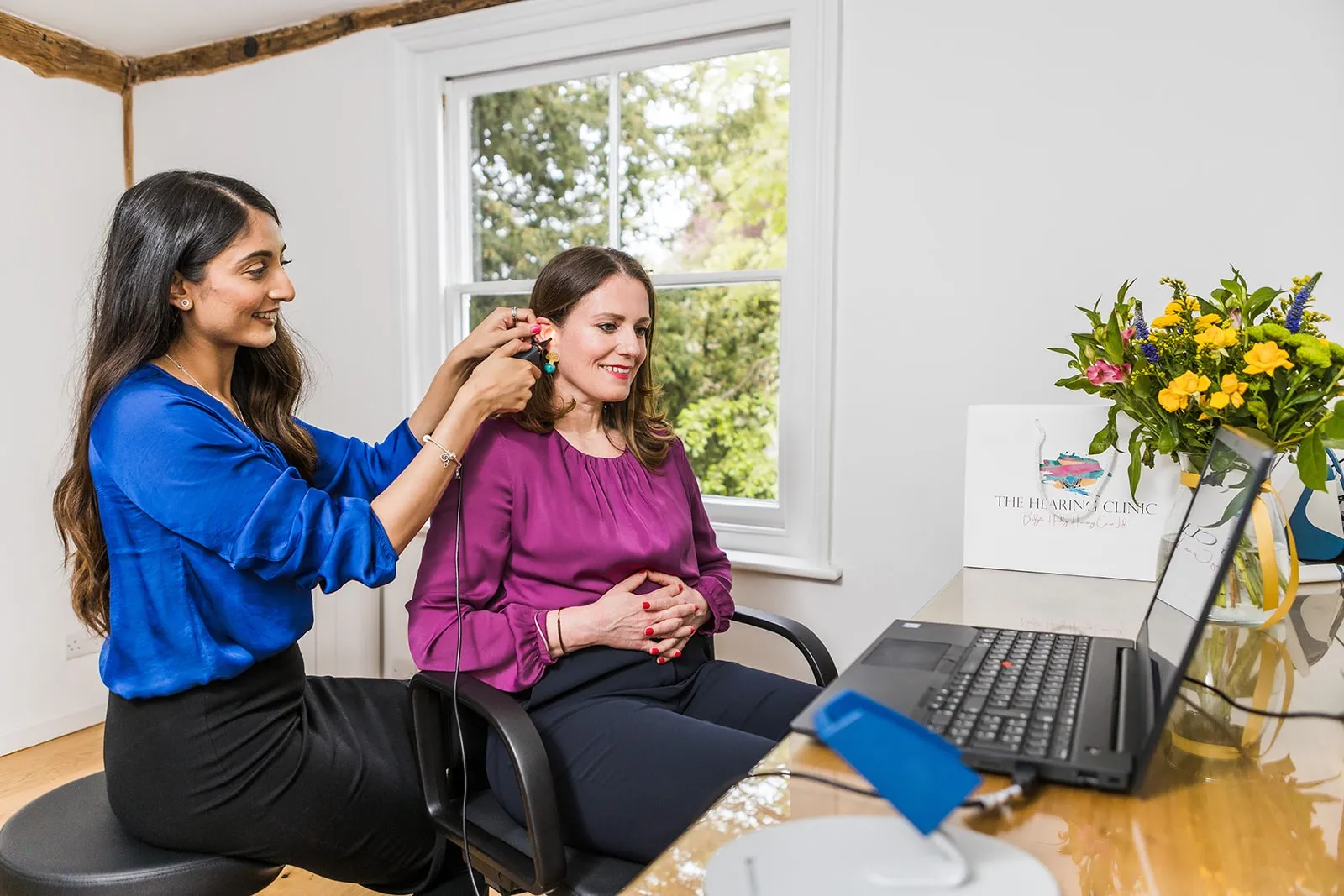
Tinnitus Therapy & Assessments
Expert tinnitus assessment and management programmes from £375, delivered by a dedicated tinnitus specialist. Get honest evidence-based care designed around you and your symptoms – no dismissals or generic advice.
You don’t need to ‘just live’ with tinnitus
If you’ve visited your GP about tinnitus, there’s a good chance you left without much in the way of answers or hope. Tinnitus is widely misunderstood, and for many people the journey to effective management involves months or years of being dismissed, redirected, or simply told nothing can be done.
At The Hearing Clinic, tinnitus therapy is a specialist area of care, led by Candice Green, Senior Clinical Audiologist and Tinnitus Specialist. Tinnitus consultations at The Hearing Clinic are £375, where we’ll assess your symptoms and work out a tinnitus therapy and treatment plan tailored to you. This may include Tinnitus Retraining Therapy, sound therapy, CBT or hearing aids.
Tinnitus has no cure, we’ll always be honest with you about that. But for the majority of patients, the right tinnitus therapy programme substantially reduces how much tinnitus affects daily life. The goal is not to eliminate the sound, but to reduce its hold on your attention so it becomes far less intrusive.
For some people, tinnitus becomes more intrusive not because it is louder, but because the brain’s attention and stress systems become more reactive. When this happens, the brain can stay focused on the sound, making it feel more persistent and harder to ignore. Early assessment helps prevent these patterns from becoming established and, with the right approach, makes tinnitus much more manageable.

Dedicated tinnitus specialist, not a generalist

Bespoke tinnitus therapy plan built around your life

Evidence-based tinnitus therapies – TRT, CBT and sound therapy

CQC-registered – independently verified clinical standards
Meet Candice Green – your dedicated tinnitus specialist
Candice leads tinnitus care at The Hearing Clinic. She specialises in the assessment and management of tinnitus and delivers advanced tinnitus therapy for patients experiencing everything from mild, intermittent ringing to severe, sleep-disrupting tinnitus that has proved resistant to previous treatment. Her approach combines clinical rigour with genuine empathy – she understands that tinnitus isn’t just a sound, it’s something that can reshape your entire experience of daily life.
Through a combination of therapies, education, and practical strategies, Candice provides structured tinnitus therapy support to help you regain a sense of control, so tinnitus becomes less intrusive and easier to live with day to day.

What happens at your tinnitus consultation?
Your initial tinnitus consultation with us lasts around 2 hours. It’s longer than a standard appointment, because understanding your tinnitus properly takes time.

Step 1: Hearing assessment
We’ll ask in detail about your tinnitus – when it started, what it sounds like, what makes it better or worse, and how it’s affecting your daily life. Sleep, concentration, work, social situations – all of it matters.

Step 2: Hearing assessment
We carry out a full hearing assessment, as tinnitus and hearing loss frequently coexist. Understanding your hearing profile is an important part of building the right management plan.

Step 3: Tinnitus assessment
We use specialist tests to characterise your tinnitus, including its pitch, loudness, and how your auditory system is responding to it.

Step 4: Your management plan
Before you leave, we’ll discuss your results and outline a bespoke tinnitus therapy and management programme. This may include a combination of, sound therapy, Tinnitus Retraining Therapy (TRT), CBT-based techniques, sleep strategies, and hearing technology if appropriate. You’ll leave with a clear plan, not a leaflet and a vague suggestion to try mindfulness.
This is what one of our patients has to say about our tinnitus therapy:
“Excellent and professional experience…”
I visited the hearing clinic in Welwyn due to tinnitus and some hearing issues. I saw Candice who was very welcoming and professional and carried out a large number of tests. I felt very confident that she would be able to advise and support me on my journey to manage my tinnitus and enable me to try all the recommendations she made. The appointment was for 2 hours and was the most thorough and comprehensive assessment I have had. I am having a hearing aid fitting in the next couple of weeks and look forward to working further with Candice. I would thoroughly recommend the Hearing Clinic to anyone with tinnitus and hearing issues.
Most of our tinnitus patients wish they’d come sooner
Book a specialist tinnitus assessment in our Hertfordshire clinics. No GP referral needed, and appointments often available within days.
Tinnitus treatment options
Because tinnitus presents differently in every patient, no single treatment works for everyone. At The Hearing Clinic, your tinnitus therapy programme is built from evidence-based approaches that target both the auditory system and the brain’s response to sound. Treatments are selected based on your assessment findings, hearing profile, and how tinnitus is affecting your daily life.
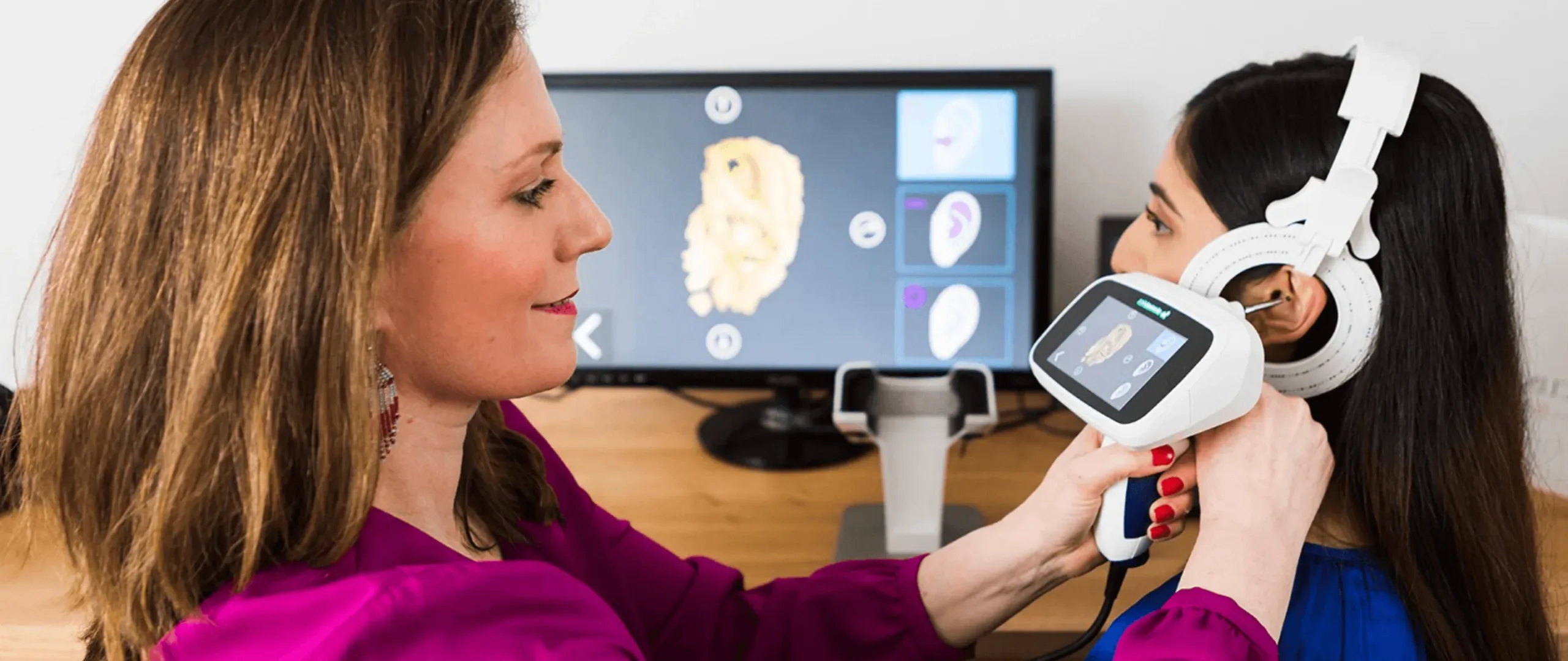
– If your assessment reveals hearing loss alongside tinnitus (which is common), hearing aids can make a significant difference
– Hearing Aids restore access to everyday sounds and reduce the contrast that makes tinnitus more noticeable. By increasing natural sound input to the brain, they can also help the brain’s tendency to ‘turn up’ internal noise
– Many modern hearing aids include built-in tinnitus management features
– Address the emotional and psychological impact of tinnitus – the anxiety, frustration and sleep disruption that often accompany it
– The Hearing Clinic use CBT techniques as part of a broader management programme to help you respond differently to your tinnitus, reducing its hold on your daily life
– Tinnitus retraining therapy combines low-level sound therapy with structured tinnitus counselling to gradually retrain the way your brain responds to tinnitus
– Sound becomes less prominent through TRT – not because it has changed, but because your brain learns to filter it out
– Tinnitus retraining therapy is one of the most effective, evidence-based tinnitus therapies available and forms the foundation of many of The Hearing Clinic’s tinnitus management programmes
– Uses carefully chosen external sounds to reduce the contrast between silence and your tinnitus
– Makes the sound less intrusive, particularly at night
– We’ll guide you on the most effective sounds and devices for your specific pattern of tinnitus
What does a tinnitus consultation cost?
A tinnitus consultation at The Hearing Clinic costs £375. This includes a full 2 hour tinnitus and hearing assessment, a detailed discussion of your results, and a bespoke management plan tailored to your symptoms and lifestyle.
Ongoing tinnitus management sessions are available as part of a structured programme. We’ll outline the options and costs clearly at your initial appointment, before you commit to anything further.
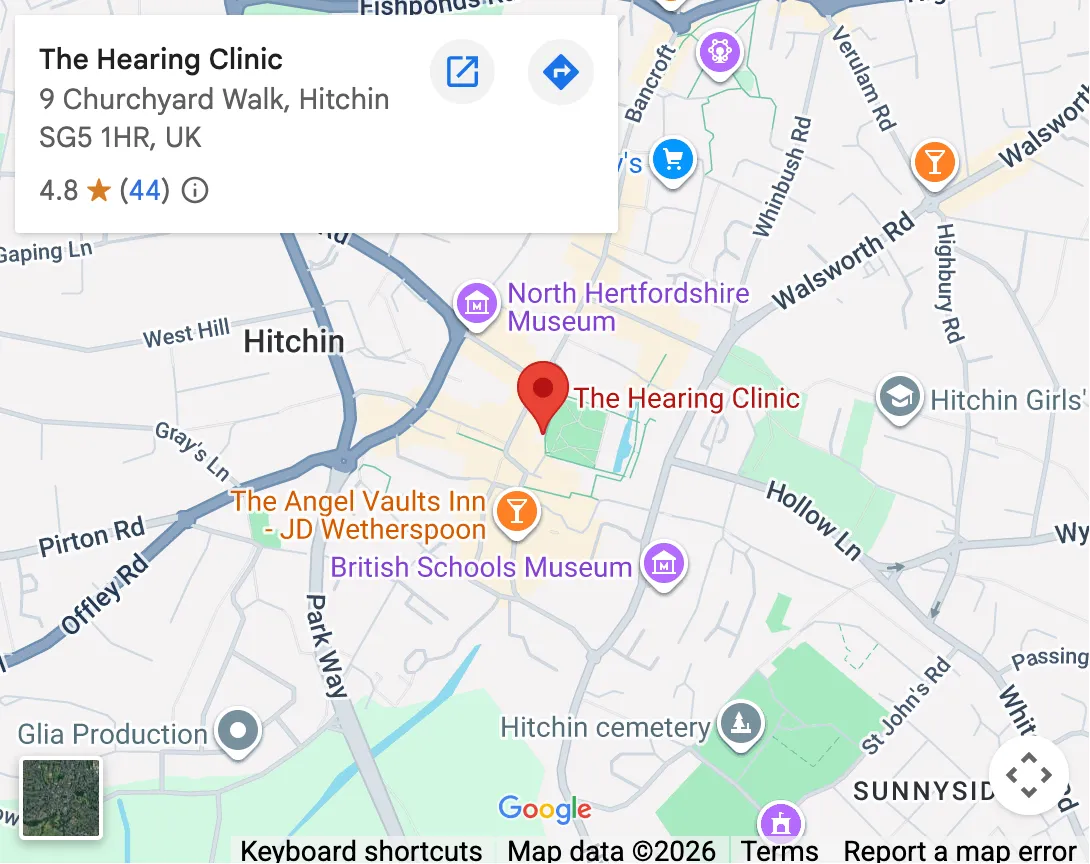

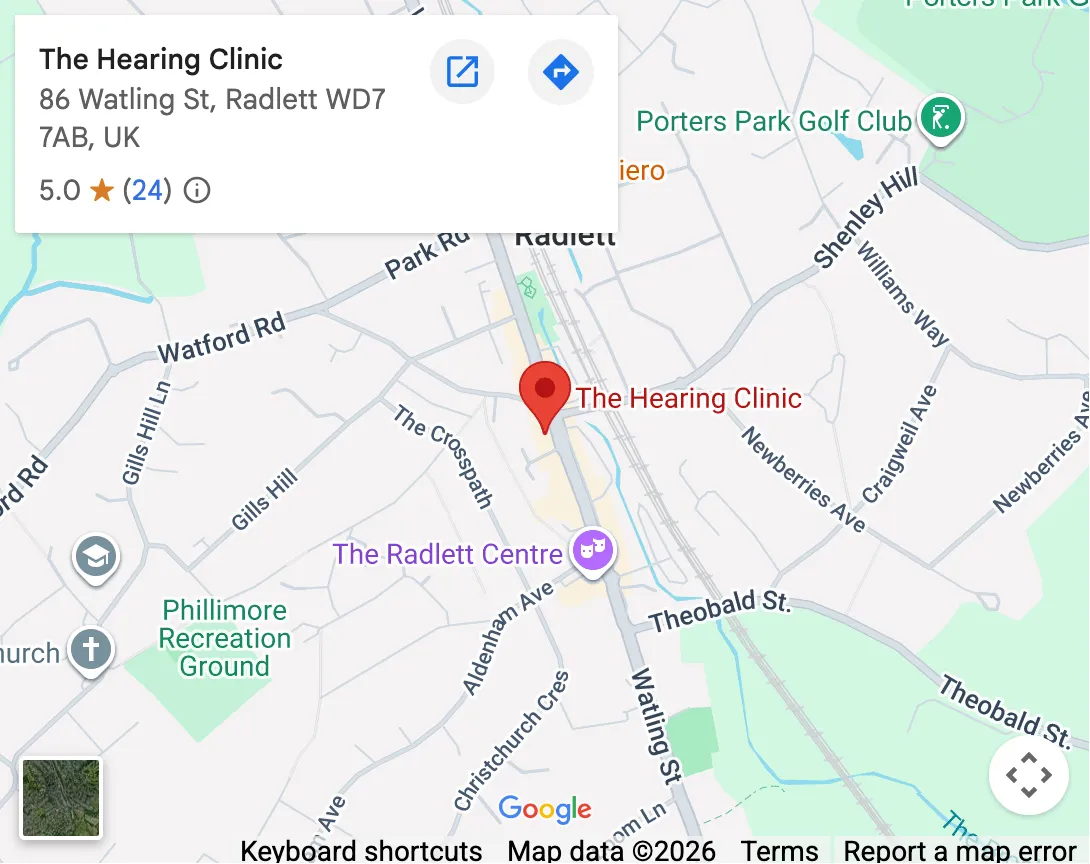
Still unsure whether we can help? Let’s talk
Tinnitus affects everyone differently, and it can be hard to know whether specialist tinnitus therapy is the right next step. Our team will listen, answer your questions honestly, and help you understand your options with no pressure and no obligation. Complete the form, and we’ll call you back.
"*" indicates required fields
Have more questions?
Don’t hesitate to contact us
We’re here to support you every step of the way. Whether you have questions about your hearing health, need help booking a private tinnitus consult, or simply want to chat with our friendly team, we’re just a message away.
Tinnitus is the perception of sound when no external sound is present. It is generated by the brain and often described as ringing, buzzing, hissing or whistling. It may be heard in one or both ears or inside the head. Around 14% of UK adults experience tinnitus, with severity varying widely.
No. You can book a tinnitus consultation at The Hearing Clinic directly, without a GP referral. If your GP has already investigated your tinnitus and you have relevant letters or test results, it’s helpful to bring these, but they’re not required.
Tinnitus is most commonly linked to changes in the auditory system, often due to hearing loss from ageing, noise exposure, or other factors. When the brain receives less sound input, it can increase internal activity, which may be perceived as tinnitus. Stress, illness, medication, and jaw or neck tension can also contribute.
In some cases, no clear cause is identified, which can be frustrating. Part of your initial tinnitus assessment with us is working through your history to understand what may be driving your tinnitus and what that means for how we manage it.
Sometimes tinnitus can go away on its own, particularly if it’s been triggered by a specific event like a loud concert or a short-term illness. Persistent tinnitus that has lasted more than three months is unlikely to resolve without management. The earlier you seek specialist support, the more options are available to you and the better your outcomes will be.
There is currently no cure for tinnitus, something we’re upfront about. However, effective management can significantly reduce the impact tinnitus has on your life. Many of our patients reach a point where their tinnitus is present but barely noticeable. That outcome is realistic and achievable for most people with the right support, and is the goal of every management programme at The Hearing Clinic.
Sleep is one of the areas most commonly affected by tinnitus, and it’s something we address directly in your management plan. CBT along with sound enrichment – using a low-level background sound to reduce the contrast between silence and tinnitus – is one of the most effective strategies. We’ll guide you on the right approach for your specific pattern of tinnitus rather than giving you a generic recommendation.
If you have hearing loss alongside your tinnitus, hearing aids can make a significant difference. Tinnitus often emerges because of hearing loss and even mild hearing loss can trigger tinnitus. Hearing aids restore the full range of sounds to the brain which means the tinnitus often significantly recedes and in some cases becomes inaudible. Many modern devices also include dedicated tinnitus management programmes. We’ll assess your hearing as part of your consultation and discuss whether hearing technology is likely to be beneficial for you.
It varies depending on the individual and the severity of the tinnitus. Some patients notice meaningful improvement within a few weeks of starting a management programme. For others, particularly those with long-standing or more severe tinnitus, progress is more gradual. We’ll be clear about realistic timescales at your initial appointment, and your programme is adjusted over time based on how you’re responding.
-

An amazing insight into what top level hearing care looks like. The hearing solution provided has been life changing.
DA
David

-
Always very professional and prompt service Everyone very pleasant Evironment very comfortable Recommend highly
AM
Anne-Marie Breen
-
I would totally recommend the hearing clinic. They are professional and very knowledgeable but also very friendly and easy to talk to.
LB
Linda Benton
-
Jo was both professional and understanding. She took so much trouble to get my microsuction right, ensuring I was comfortable throughout the process. I now have a much better understanding of my ears and of how to prevent wax building up in future.
RI
Richard
-
I highly recommend the hearing clinic at Harrogate. I was on holiday at the time but managed to get an appointment after suffering muddled hearing for a few weeks. I have had my ears syringed in the past but never micro suctioned, which turned out to be a painless procedure.
CD
Carolyn Dunn
-
This is my third set of hearing aids that I’ve purchased from them — something I wouldn’t do if I didn’t have complete trust in both the technology and the people supporting me. Each time, Claire has guided me towards the right choice for my needs, and the improvement in my everyday life has been remarkable.
WI
Wilson
-
On enquiry I received an appointment swiftly. The service offered was excellent and the practitioner informative, efficient and extremely pleasant. I have booked a further appointment and was extremely impressed with the service. Well done.
MC
Marjorie Cheryl
-
Very caring with my mother who has alzheimers and explained every stage of what was happening in an easy understandable way.
LA
Lee