

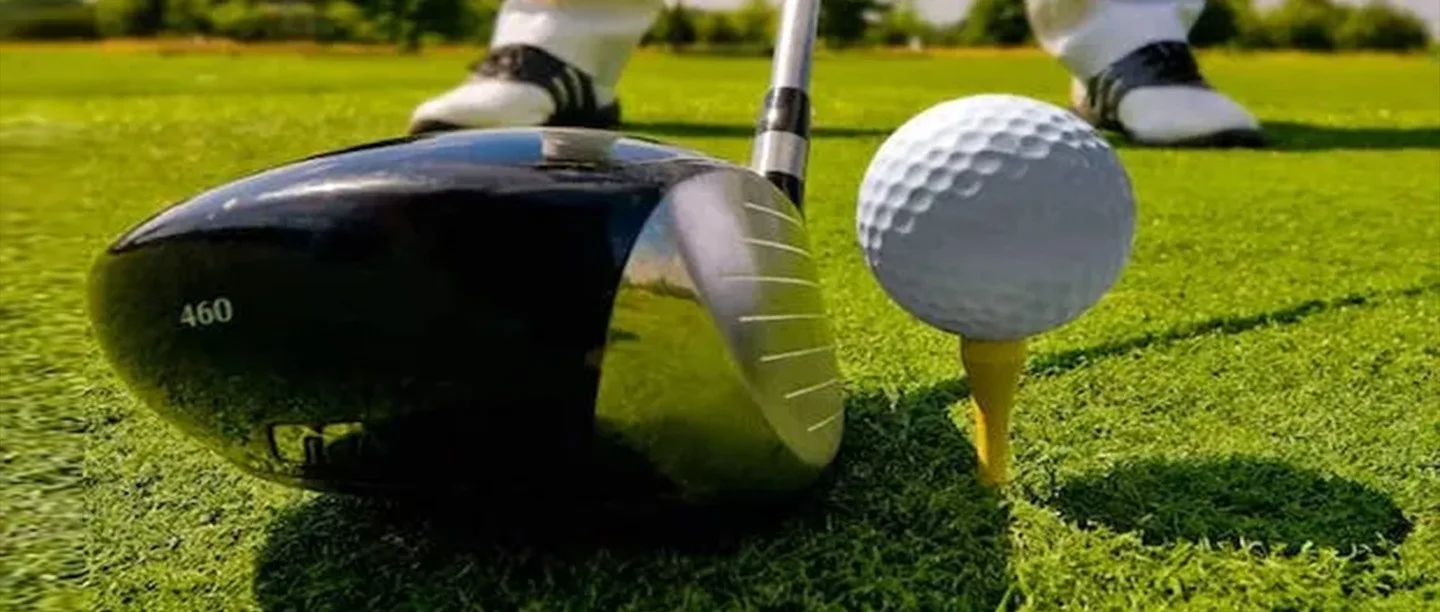
That satisfying “thwack” as the club meets ball is part of golf’s charm — but could it be doing your ears a disservice? A careful in-ear study by Zhao & Bardsley (BMJ Open, 2014) measured the actual sound at the eardrum when amateur golfers struck balls with modern drivers. The findings are reassuring for most recreational players, though they come with a clear caution.
What the study did
Nineteen amateur golfers hit a series of balls with three different driver types while probe microphones recorded sound pressure levels (SPLs) and frequency peaks right in the ear canal. This real-ear measurement gives a truer picture than a meter standing out in the open, because it captures how the ear canal and head shape the sound reaching your eardrum.
Key findings
– Typical drivers in the study produced ear-canal peaks around 82–88 dBA. One driver averaged about 98–100 dBA and occasionally recorded very high peaks.
– Using accepted exposure calculations, hitting a usual basket of 40 balls contributed only 0.05–1.8% of a daily noise dose — well below occupational limits. That means the immediate risk of noise-induced hearing loss (NIHL) for most amateurs is low.
– However, the study noted that impulse sounds exceeding ~116 dBA could pose a real risk if experienced repeatedly. Some club designs (thin-faced titanium, specific head shapes) and very powerful swings — more common among pros — can produce louder, higher-pitched impulses.
Why club design matters
Sound isn’t just about volume. Frequency peaks (found between ~2.5–3.5 kHz in this study) and the “sharpness” of the impact also influence how we perceive loudness and how potentially damaging a sound can be. Manufacturers shape club materials and face geometry for performance and pleasing impact sound — which can sometimes raise SPLs.
Practical tips for golfers
- If you practice casually or hit the range occasionally, your hearing risk is likely minimal.
- If you’re hitting hundreds of balls frequently, using high‑power drivers, or you notice very loud, sharp peaks, consider wearing low‑profile ear protection.
- Pay attention when a club sounds unusually loud or piercing — that’s a cue to check volume and exposure.
- If you have persistent ringing, hearing changes, or concern after frequent practice, book a hearing check.
Source: Zhao F, Bardsley B. Real‑ear acoustical characteristics of impulse sound generated by golf drivers and the estimated risk to hearing. BMJ Open 2014;4:e003517.