

Summary of article by Jeremy Rothman Salesin
The right seat for you: how to pick (and design) the best spot in the concert hall
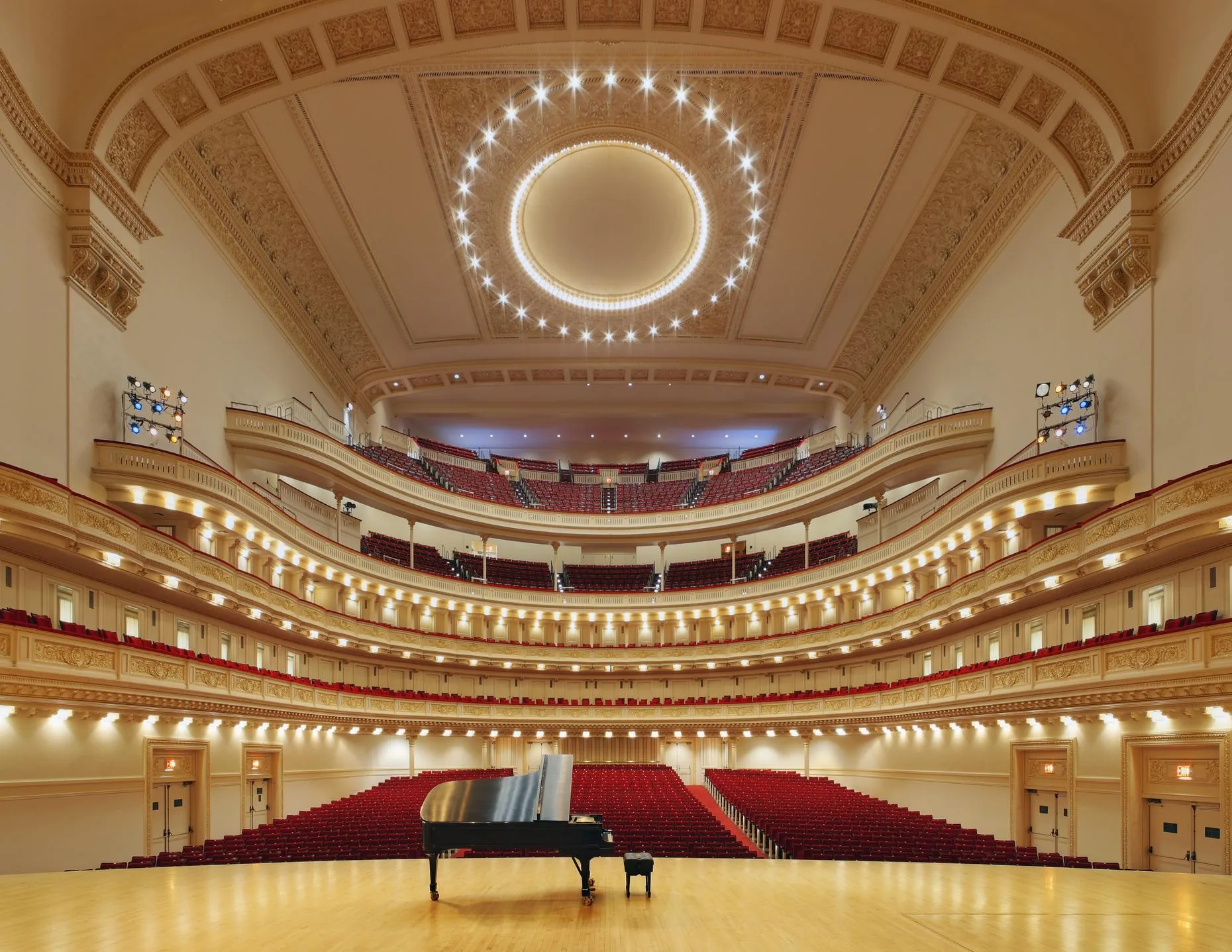
Walking into a concert hall, how do you pick your seat? Maybe you want a perfect view of the soloist’s hands, an aisle for easy exits, or the richest sound possible. Most of us balance a mix of visual, physical and acoustical needs — and the right choice depends on which matters most to you.
Why seats sound different Acousticians and designers often aim for an “average” sound across a hall. Standards exist (ISO 3382-1) and tools measure things like loudness, reverberation and clarity. But those averages hide variation: one seat can feel intimate and enveloping, another crisp and direct. And listeners aren’t all the same — some love a big, immersive sound, others want crystal clarity. What’s perfect for one person is wrong for another.
Sightlines matter, too Seeing the performers is part of the live magic. Research shows visual cues — watching a musician’s expressions or seeing a conductor — can shape the emotional experience as much as the sound. So the ideal seat often depends on where you want to look as well as what you want to hear.
Practical needs can win out Accessibility, legroom, aisle seats, and easy trips to the loo are hugely important for many. For true equity, venues should offer accessible seats that give equivalent sight and sound to other spots. Sometimes practical needs are the deciding factor — and that’s fine.
Turning variability into a feature rather than treating seat-to-seat differences as a flaw, what if we used them? Researchers at the University of Washington developed “Seat Sublime,” a digital system that matches a person’s preferences (acoustical, visual and physical) to specific seats using 3D modelling and acoustic simulation.
How it works, simply
Create a 3D model of the venue (stage, seats, surfaces).
Run three analyses: visual sightlines, physical logistics (walking distance, wheelchair access), and acoustics (reverb, loudness, clarity, envelopment).
Let the audience member rate what they care about most. The system scores each seat and suggests the best matches.
You can pick priorities (for example: see the pianist’s hands, then envelopment, then an aisle seat) and the system highlights top seats with colour maps or scores. It can also respect absolute needs like wheelchair access.
Tools behind it The team used Rhino/Grasshopper for the geometry and workflows and Treble Technologies’ simulation for acoustics. These tools let designers and venue managers explore how changes (movable panels, curtains) affect seats across the hall.
Who benefits?
Audience members: personalised recommendations mean you’re more likely to get the experience you want.
Designers: see how choices affect real people and balance sight, sound and seating.
Venue operators: test variable acoustics and plan configurations for different programmes.
Performing arts organisations: guide ticket buyers to seats best suited to the programme, and use feedback to refine recommendations.
Smarter recommendations with AI Not everyone wants to fill a detailed survey. Simple data — age, gender, music tastes, past ticket choices, even phone music preferences — could let the system infer likely priorities and suggest seats automatically. That could make personalised seating more accessible at scale.
Why this matters Live performance is about connection. New tech that understands both the hall and the listener helps match people to the right seats for the music they’re seeing. Instead of fights over “the best seat,” we can embrace variety and give everyone a better chance of a great night.